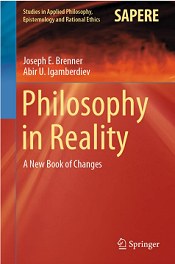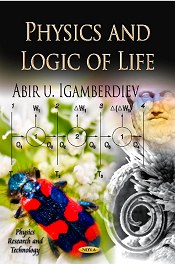

Igamberdiev was born in Almaty (Kazakhstan) and lived in Voronezh (Russia) where he studied biology at Voronezh State University. He earned a PhD in biology from the same university in 1985 and a Doctor of Science (habilitation) degree at the Institute of Plant Physiology of the Russian Academy of Sciences in Moscow in 1992. In the 1990s, he was a guest scientist at Umeå University (Sweden), Free University of Berlin (Germany), University of Wyoming (USA), and Risø National Laboratory (Denmark). In 2002, he permanently moved to Canada where he worked at the University of Manitoba (Winnipeg) and then at the Memorial University of Newfoundland (St. John's, Newfoundland), where he is currently a professor at the Department of Biology.
Igamberdiev has published over 300 peer-reviewed journal publications and several edited books. He currently is editor-in-chief of the Elsevier journal BioSystems and a subject editor of the Journal of Plant Physiology. He is an author of short stories and essays on classical music, literature, and philosophy.
Igamberdiev's research focuses on the organization of metabolism, bioenergetics of plant cells, plant enzymology, adaptation to hypoxic stress, nitric oxide metabolism in plants, the function of plant hemoglobins, foundations of theoretical biology, evolutionary theory, natural philosophy, and dynamics of social systems. Igamberdiev has contributed to the characterization of metabolic pathways and enzymes of plant respiratory metabolism and to the discovery that mitochondria use nitrite as an alternative electron acceptor under anoxia (anaerobic respiration) and produce nitric oxide, which is scavenged by hemoglobin. He has developed the concept of thermodynamic buffering in metabolism that supports the sustainable non-equilibrium dynamics of living systems. He introduced the concept of the internal quantum state of living systems that maintains their computational properties and determines morphogenesis and evolution. Igamberdiev analyses evolutionary complexification from the point of view of the increase of external work performed by the biosystem and the maximization of its self-maintenance and adaptability, which is achieved through the establishment of robust self-maintaining configurations acting as attractors resistant to external and internal perturbations. He views the evolution of social systems as a continuous generation and interaction of reflexive models of externality that trigger social dynamics and establish the structure of societies.