"The capcity of living organisms to alter their own heredity is undeniable. Our current ideas about evolution have to incorporate this basic fact of life."
(Evolution: A View from the 21st Century, p.2)
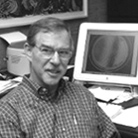
James A. Shapiro has worked as professor of microbiology at the University of Chicago since 1973. Earlier, while working at Harvard, Shapiro was part of the first team to isolate a single gene from an organism. An expert in bacterial genetics, he proposes the concept of Natural Genetic Engineering, a process described to account for novelty created in the process of biological evolution. Shapiro is an advocate of non-Darwinian evolution and is a critic of the modern synthesis. He has published primary scientific literature on evolution since the early 90s.
"The capcity of living organisms to alter their own heredity is undeniable. Our current ideas about evolution have to incorporate this basic fact of life."
(Evolution: A View from the 21st Century, p.2)

James A. Shapiro proposes an important new paradigm for understanding biological evolution, the core organizing principle of biology. Shapiro introduces crucial new molecular evidence that tests the conventional scientific view of evolution based on the neo-Darwinian synthesis, shows why this view is inadequate to today’s evidence, and presents a compelling alternative view of the evolutionary process that reflects the shift in life sciences towards a more information- and systems-based approach in Evolution: A View from the 21st Century.
Shapiro integrates advances in symbiogenesis, epigenetics, and saltationism into a unified approach that views evolutionary change as an active cell process, regulated epigenetically and capable of making rapid large changes by horizontal DNA transfer, inter-specific hybridization, whole genome doubling, symbiogenesis, or massive genome restructuring.
Evolution marshals extensive evidence in support of a fundamental reinterpretation of evolutionary processes, including more than 1,100 references to the scientific literature. Shapiro’s work will generate extensive discussion throughout the biological community, and may significantly change your own thinking about how life has evolved. It also has major implications for evolutionary computation, information science, and the growing synthesis of the physical and biological sciences.
Physics of Life Reviews 10 (2013) 287–323
Abstract:
The genome has traditionally been treated as a Read-Only Memory (ROM) subject to change by copying errors and accidents. In this review, I propose that we need to change that perspective and understand the genome as an intricately formatted Read–Write (RW) data storage system constantly subject to cellular modifications and inscriptions. Cells operate under changing conditions and are continually modifying themselves by genome inscriptions. These inscriptions occur over three distinct time-scales (cell reproduction, multicellular development and evolutionary change) and involve a variety of different processes at each time scale (forming nucleoprotein complexes, epigenetic formatting and changes in DNA sequence structure). Research dating back to the 1930s has shown that genetic change is the result of cell-mediated processes, not simply accidents or damage to the DNA. This cell-active view of genome change applies to all scales of DNA sequence variation, from point mutations to large-scale genome rearrangements and whole genome duplications (WGDs). This conceptual change to active cell inscriptions controlling RW genome functions has profound implications for all areas of the life sciences.
Continue reading here (need access).
or
RNA Biology 11(3) RNA, (March 1, 2014, special issue dedicated to Carl Woese)
Abstract:
The development of rigorous molecular taxonomy pioneered by Carl Woese has freed evolution science to explore numerous cellular activities that lead to genome change in evolution. These activities include symbiogenesis, inter- and intracellular horizontal DNA transfer, incorporation of DNA from infectious agents, and natural genetic engineering, especially the activity of mobile elements. This article reviews documented examples of all these processes and proposes experiments to extend our understanding of cell-mediated genome change.
Download PDF version here.
Or access the article here or here (need account).
Her choice of content makes Barabara McClintock’s 1983 Nobel Prize address an extraordinary scientific document. Despite the fact that she received the most prestigious of scientific honors “for her discovery of mobile genetic elements,” her speech reviews her career since 1931 (McClintock 1931; Birchler, this volume) without describing any of the evidence for transposition, the genome restructuring process cited as her major achievement. She simply tells us that many of her observations involving transposable controlling elements have been repeated in numerous organisms, but she does not explain how she demonstrated their genetic mobility in maize. Her text treats the underlying mechanisms as well-established science not requiring specific review.
For a list of all publications from James Shapiro, click here or visit the University of Chicago website link below.
Excerpt:
Suzan Mazur: But if a collapse in this philosophical belief system has occurred — as you’ve said: “the DNA record definitely does not support the slow accumulation of random gradual changes transmitted by restricted patterns of vertical descent” –
James Shapiro: Yes, that’s a statement of empirical observation.
Suzan Mazur: So is science now without an acceptable explanation as to how evolution happened?
James Shapiro: No I don’t think so. We see bits and pieces of the whole process. Certainly we have paleontological evidence. We have the comparative biology. It started off as comparative anatomy but it’s gone much farther than that, of course. All of this tells us about relationships. And now we have the genome evidence, which solidifies our view in the evolutionary relationships. It complicates the picture, but it adds an element — which is the one I’ve been focusing on — the process of genome change itself that is critical. That is what I call “natural genetic engineering.”
To read the full interview, click here.